الوضع الليلي


 4:26:14
  2024-09-24
  1481
1481
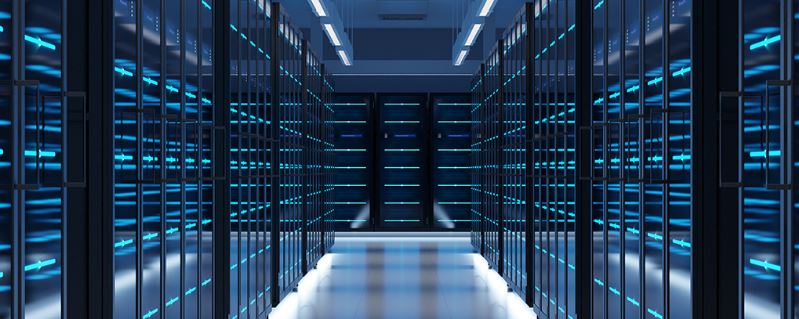
Japan already has one of the fastest supercomputers in the world with its Fugaku rig, but the country's scientists are looking at a seriously hefty upgrade in the next few years: a Fugaku Next supercomputer that's roughly a thousand times faster than current systems.
It would be the first 'zetta-class' supercomputer in the world – a machine capable of reaching speeds at the zettaFLOPS level, the next step up from the exaFLOPS level we're at today. Flops, or floating-point operations per second, indicate how quickly systems can make calculations and solve problems.
A couple of years ago, the Frontier supercomputer in the US demonstrated a processor speed of 1.1 exaFLOPS, which is 1.1 quintillion floating-point operations per second (a quintillion is 1 followed by 18 zeros).
Multiple that by 1,000, and you get a sextillion FLOPS (1 followed by 21 zeros) – a zettaFLOP. That's the target this new supercomputer is going to aim for, and the Japan Ministry of Education, Culture, Sports, Science, and Technology (MEXT) has given the green light for construction on the machine to start in 2025.
The plan is to get Fugaku Next online by 2030, with government funding of 110 billion Japanese Yen (US$780 million), according to Japanese news site Nikkei. There will then be a phase where the new supercomputer takes on some of the tasks of the current one – but with a lot more processing power at its disposal.
The official project information, published by MEXT, makes several mentions of artificial intelligence. Working through AI calculations – especially when it comes to generative AI tools like ChatGPT – is a notoriously demanding process, and could be one of the key areas where Fugaku Next shines.
Supercomputers have proved consistently useful to scientists, helping researchers simulate black hole, discover new materials, model Earth's future, and probe the foundations of mathematics. As these machines continue to get more powerful, we should see their capabilities expand too.
Unlike quantum computers, supercomputers aren't too different from the desktops and laptops we all use every day: they're just scaled up to an incredibly high level. They're still based on processors, memory, and storage, but taken to extremes.
As those examples above show, where supercomputers can really make a difference is in simulations where an incredible number of variables are involved – whether that's weather systems or deep space missions.
An upgraded zetta-class machine could be trained on more data, at a faster speed, and produce results that are more detailed, more accurate, and more comprehensive. If all goes well, six years from now, there should be a new supercomputer standard.
Reality Of Islam |
|
NASA has de
MIT researc
Researchers
Researchers
 9:3:43
2018-11-05
9:3:43
2018-11-05
10 benefits of Marriage in Islam
7:5:22
2019-04-08
benefits of reciting surat yunus, hud &
9:45:7
2018-12-24
advantages & disadvantages of divorce
11:35:12
2018-06-10
6:0:51
2018-10-16
5:58:12
2021-12-18
12:10:56
2022-11-17
6:14:17
2018-06-21
6:14:3
2023-01-18
7:26:19
2022-04-08
10:43:56
2022-06-22
10:35:40
2022-05-26
5:41:46
2023-03-18
| LATEST |
 HOME
HOME