ELISION
Elision refers to when a sound or syllable is lost or omitted. It particularly affects: (a) consonant clusters, (b) weakly stressed syllables that are not especially missed and (c) words that end in an alveolar consonant and that are immediately followed by a word beginning with a consonant. The sounds that are elided are those sounds that are so weakly articulated that they no longer have any auditory significance. Contracted forms of words are caused by elision.
Some elided syllables are represented in standard punctuation, for example, /I'm/ should be /I am/. In standard speech, the missing vowel is understood and so meaning does not suffer from this contraction. Elision is one of the reasons for the great mismatches found in English between a word's spelling and its pronunciation. [Wednesday], for example, was originally a contraction of [Odin's day] while today, Odin is barely discernable as the /d/ is no longer pronounced. Elision is most commonly used in, but is not exclusive to, connected speech. The faster the speech, the more likely that sounds and syllables will be elided. Notice that when a vowel is elided, it is usually a weak vowel, typically the schwa. When a consonant is elided, it is usually because it is in an environment with other consonants.
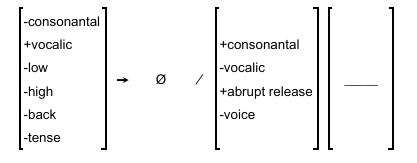
One cause of elision is the loss of a weak vowel after the voiceless plosives /p/, /t/ and /k/. The word permit is often pronounced as [pˈmit] which is an example of the schwa sound /ə/ being elided after /p/.
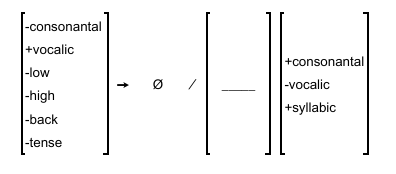
Another cause of elision is when a weak vowel is elided before the syllabic consonants /l/, /m/, /n/ and sometimes /r/. The pronunciation of the word seven [ˈsevn] demonstrates the loss of the schwa /ə/ before the /n/ sound.
Complex clusters are often elided in order to simplify the saying of the sound. The word clothes /kləʊðz/ is often elided to the much simpler pronunciation /kləʊz/.
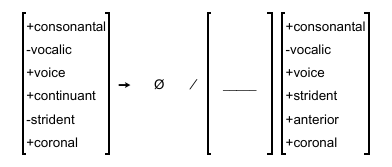
/v/ is often elided when it comes before a consonant. The Russian proper name Pavlov is, therefore, sometimes elided to [ˈpæləf] which is a much simpler pronunciation.
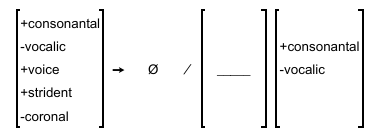
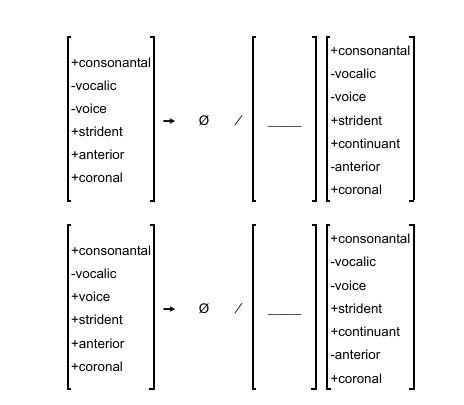
Some elisions are just by convention or to speed up or simplify the way we speak. For example in the phrase horse shoe, the /s/ sound is usually elided to make the pronunciation of the phrase easier; hence, [ˈhɔ:ʃu:]. In other words, the /ʃ/ sound affects any /s/ or /z/ sound that comes before it. Take the following examples:
this shoe [ðɪˈʃu:]
for those shoes [fəðəʊˈʃu:z]