الوضع الليلي


 1:27:37
 2026-10-03
 774
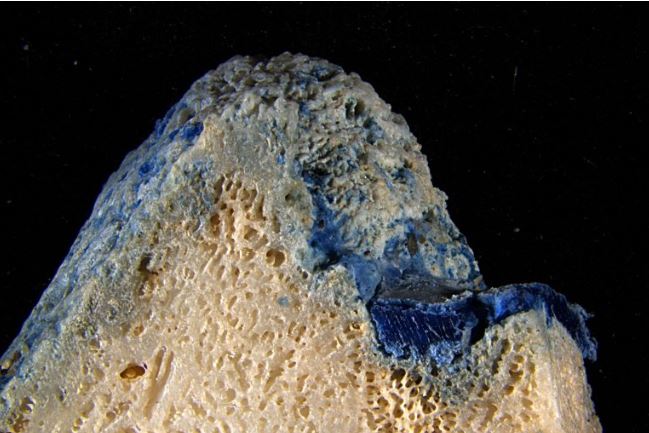
‘Plasticorals,’ pieces of coral rubble fused with plastic, are lasting signs of human activity and may pose a threat to marine ecosystems.
While widely manufactured materials like cement and steel degrade over millennia, plastic remains intact long enough that future geologists will likely identify the period from the 1950s onward as a distinct synthetic layer in the Earth’s crust. This era is popularly called the Plasticene, and researchers are now documenting how synthetic debris physically merges with natural environments.
On the beaches of Okinawa, Japan, melted household plastic has seeped into the tiny pores of dead coral, forming debris that researchers call “plasticorals.” The plastic and coral have become inseparable, creating a form of pollution that could wash back into the sea in rubble that normally supports reef life.
Melted plastic inside coral skeletons
Small, brightly colored specks among the pale coral rubble first drew researchers’ attention during routine beach litter surveys on the subtropical island.
A team from the Okinawa Institute of Science and Technology (OIST) and the University of the Ryukyus brought samples back to the lab for microscopic examinations and spectroscopy, which helps identify substances through their interaction with light. Together, these analyses revealed that the specks were melted polymers from common household plastics embedded within the coral skeletons.
Beach bonfires are one likely source of the heat that allowed the plastic to melt and seep into those spaces, although the debris’s exact origin remains unresolved. The fused material belongs to a broader category called “plastiglomerates,” mixtures of plastic and naturally occurring materials.
In their paper in Marine Pollution Bulletin, first author Dr. Ifenna Ilechukwu and senior author Professor James D. Reimer introduced the name “plasticorals” for this coral variety.
When reef habitat contains plastic
Once washed back into the sea, coral rubble provides a stable surface for new corals to grow. Its irregular shapes also create sheltered spaces where juvenile fish and other small marine animals can escape strong currents and predators. Plastic embedded in that habitat presents a potential additional threat to reefs already under pressure from climate change and other human activities.
Previous studies have shown that chemicals leaching from common polymers can disrupt coral reproduction. Plastic pieces can also harbor coral pathogens and move up through the marine food chain, giving researchers several possible routes of harm to investigate.
Further research is needed to determine how plasticorals specifically affect reef organisms, including whether they expose those organisms to toxic substances.
Reality Of Islam |
|
Tiny magnet

Researchers
Keeping sil
Two experim
 9:3:43
2018-11-05
10 benefits of Marriage in Islam
7:5:22
2019-04-08
benefits of reciting surat yunus, hud &
9:45:7
2018-12-24
advantages & disadvantages of divorce
11:35:12
2018-06-10
6:0:51
2018-10-16
7:34:7
2023-02-28
11:34:48
2022-06-29
7:0:55
2022-05-17
12:47:1
2022-12-20
3:43:50
2022-11-05
8:39:51
2022-09-23
1:34:8
2022-02-01
5:41:46
2023-03-18
| LATEST |
 HOME