APPLIED LINGUISTICS for BA Students in English
PLANNING
General principles of course design
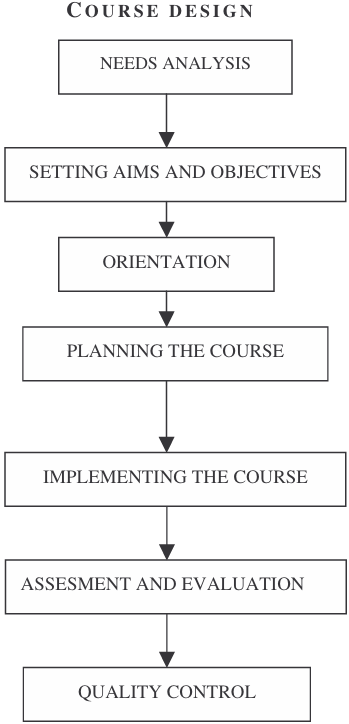
While planning a training program the designer of the course has to take the following steps into consideration:
1. needs analysis – the needs of the target group have to be considered carefully so that the designer can decide on the course content
2. setting aims and objectives – by aims we mean the overall general goals of the training program e.g. achieving B2 level in oral communication; by objectives we mean the more concrete targets of a course which specify the language, content and methodology of the course to be planned;
3. orientation – at this stage of planning brainstorming with colleagues and selecting course materials go on; this procedure can be supplemented with negotiating with learners as well;
4. planning the course – at this stage the content of the course with the teaching methods to be used are defined and organized; the time to be devoted to certain parts of the course must also be designed;
5. implementing the course – this stage of planning means planning teaching units (lessons and periods), teachers are supposed to set aims and sub-aims of the lesson, select suitable teaching techniques and specify learners’ and teachers’ roles;
6. assessment and evaluation – here course designers plan the various ways of course evaluation and the different types of assessment, the ways of testing, etc.
7. quality control – means the different types of accreditations during which the course will be evaluated and compared with standards and sometimes modified in order to improve the required quality.
In the following chart taken from Matheidesz, M. (2002) we can see what criteria of planning are to be considered. If we miss any steps of designing, we can lose the interests of the target group or the support of our colleagues. Quality control is especially important today when we want to standardize and harmonize our teaching programs not only with Hungarian but with European colleagues as well.