NON-EXPERIENTIAL THEMES
Textual Themes
Textual Themes include a variety of connectors or connective adjuncts such as how ever, besides, therefore, now, first, then (non-temporal) next and anyway. These connect the clause to the previous part of the text by indicating relations such as addition, con cession, reason, consequence, and so on.
I don’t feel like playing tennis. Besides, it’s starting to rain.
All these different types of element can be considered as being part of the Theme, as long as they are placed before the experiential theme (Subject, Circumstantial, Object or Complement). Most of them can function in other positions in the clause, and so represent a real choice when used thematically. Coordinators such as and, but and or, conjunctions such as when and relative pronouns such as who, which, that are inherently thematic and do not have alternative placements. For this reason, they will not be taken into account in our analyses.
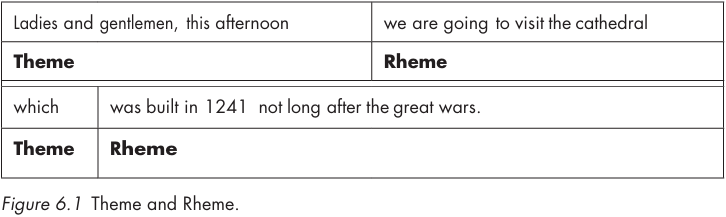
Non-defining relatives, however, because they are analyzed as supplementives, may be considered as having Themes and Rhemes in their own right. The following sentence may be analyzed as two Theme–Rheme units as follows:
Ladies and gentlemen, this afternoon we are going to visit the cathedral, which was built in 1241 not long after the last of the great wars.
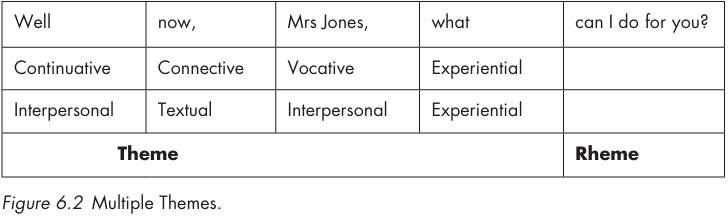
By including the many different classes of items within the Theme category, it is possible to claim that the three macro-functions of language, the experiential, the interpersonal and the textual, can be represented by items within the Theme. Here is an examples of Multiple Themes.