الوضع الليلي


 12:23:36
  2026-08-13
  1325
1325
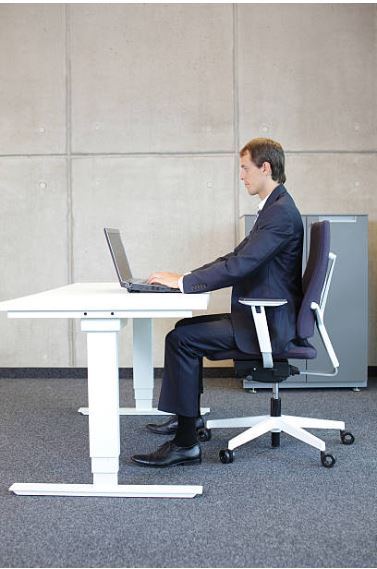
New research suggests that even a small shift in posture may influence both mood and the ability to take calculated risks.
In a McGill University experiment involving nearly 200 participants, people encouraged to sit upright reported stronger feelings of pride and performed better in a game that balanced risk against reward. Those who leaned over a low desk generally took fewer risks and earned less.
The findings suggest that ordinary features of a room, including desk height and screen placement, may shape behavior in subtle ways without people noticing.
Jorge Armony, a professor in McGill’s Departments of Psychiatry and Psychology and the study’s senior author, emphasized that the effects were modest and observed under controlled laboratory conditions. Still, he said the results offer further evidence that physical position can influence emotional experience and decision-making.
How Researchers Changed Sitting Position
Rather than asking participants to sit in a particular way, the researchers changed the environment around them. This distinction was central to the experiment.
After completing initial computer tests, participants moved to a tablet for what they believed was an evaluation of a mobile application. Some used a tablet raised on a stand and placed on an adjustable table, naturally encouraging a straighter sitting position. Others worked with the tablet lying flat on a lower desk, causing them to bend forward.
Upright Posture and Smarter Risk-Taking
The volunteers then played a computerized game known as the balloon analog risk task. Each time they inflated a virtual balloon, they increased the potential reward. But every additional pump also raised the chance that the balloon would burst and erase the earnings from that round.
Participants sitting upright tended to inflate the balloons further and collect larger rewards. Their behavior was not simply reckless, according to the researchers, because they also performed more successfully overall.
“This suggests they were not acting more impulsively but rather were engaging in more effective risk-taking,” Armony explained.
The difference also appeared in participants’ emotional responses. In a questionnaire, the upright group reported significantly greater feelings of pride, an emotion associated with positive mood.
Testing the Power Pose Debate
Debate over posture’s psychological effects has continued for years, particularly following widely publicized research on “power poses.” Critics have argued that people in such experiments may guess the study’s purpose and respond in ways they think researchers expect.
The McGill team designed its experiment to reduce that possibility. Participants received no instructions about how to hold their bodies. Instead, the position of the tablet and desk quietly guided their posture.
Interviews conducted afterward indicated that most participants did not realize posture was part of the experiment. The study also found that the results remained after accounting for possible complications such as physical discomfort and awareness of the manipulation.
What the Findings Really Mean
To confirm that the setup produced a measurable physical difference, the researchers used video analysis software to track the angle of each participant’s neck. Earlier posture experiments often relied on instructions without objectively measuring whether people consistently adopted the intended position.
The study does not show that sitting straighter will radically improve someone’s judgment, confidence, or success. Posture is only one of many factors that may affect mood and behavior, and the researchers cautioned against treating it as a dramatic life-changing technique.
Still, the findings raise a broader possibility: everyday surroundings, including the design of our workspaces, may quietly shape how we feel and make decisions.
Reality Of Islam |
|

Keeping sil

Two experim

Changing a

Plants are
 9:3:43
2018-11-05
9:3:43
2018-11-05
10 benefits of Marriage in Islam
7:5:22
2019-04-08
benefits of reciting surat yunus, hud &
9:45:7
2018-12-24
advantages & disadvantages of divorce
11:35:12
2018-06-10
6:0:51
2018-10-16
2:13:43
2022-05-27
7:34:7
2023-02-28
10:35:40
2022-05-26
4:25:57
2023-02-11
4:26:43
2022-02-21
8:30:23
2022-03-03
12:10:56
2022-11-17
5:41:46
2023-03-18
| LATEST |
 HOME
HOME