الوضع الليلي


 8:51:40
  2026-07-27
  723
723
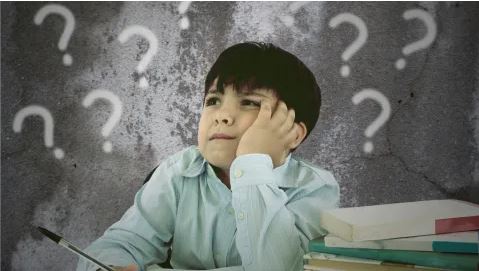
A Child's Dislike of School
Studies conducted by educational and psychological experts have shown that a child's dislike of school can be attributed to more than one reason. One of the most important is the child's feeling of excessive anxiety and stress when facing a new experience and a different way of life.
Stress and anxiety increase when the child is unable to express himself or herself, when adults do not listen to the child's fears, or when they underestimate or belittle them. In addition, the numerous pressures associated with education—including homework and the enormous amount of material that children are expected to learn within short and limited periods, along with the lack of sufficient opportunities to practice their hobbies—can lead the child to develop a feeling of rejection toward everything around them. As a result, the child directs his or her anger and dislike toward the school, which is perceived as the cause of the problem.
This negative attitude may also develop because the child feels a lack of security and a stable family atmosphere. The child may be exposed to problems that are beyond his or her age, such as conflicts between the father and mother. Unconsciously, the child may then attempt to punish the family by trying to avoid school or by failing academically.
For this reason, these studies emphasize the importance of creating an atmosphere of love and harmony at home so that the lost affection between the child and the school can be restored.
The English psychologist Graham Chayman explained that a child's dislike of school tends to appear more severely around the age of eleven. This is the period when the child moves to middle school, where he or she faces a large amount of lessons and curricula that differ in their nature and volume from what the child experienced during the early primary stage. The primary stage mainly focuses on providing basic information and giving children opportunities to develop their skills and abilities while enjoying their childhood.
The psychologist Jean Berg observed that approximately 70% of children who developed a strong dislike of school later suffered from psychological imbalance.
The Influence of a Teacher's Clothing on Children
A recent study confirmed that students in the basic education stage are influenced by what their female teachers wear in the classroom, including clothing and accessories, since teachers at this stage often serve as substitute maternal figures.
Among the most important findings of the study, which was conducted on 261 schools, was that unmarried female teachers showed greater interest in clothing accessories than married female teachers.
The study also found that younger female teachers were more inclined to pay attention to clothing accessories than older teachers, while female teachers in middle and secondary schools showed greater interest in clothing than teachers in primary schools.
As a result, the study of teachers' clothing behavior became the subject of the first scientific study of its kind. This is particularly significant because the educational process does not stop at the amount of knowledge a child acquires during his or her years of education. Rather, it extends beyond that, since it has become clear that children are influenced by the behavior of their teachers inside the classroom, including their clothing.
The study calls for educators to be provided with practical and concise information on how to approach clothing choices so that they can have a positive influence on students. It also emphasizes the need for further studies to identify students' attitudes toward female teachers who prefer modest clothing.
A Child's Inattention and Lack of Academic Achievement
Recent scientific research indicates that a high percentage of children whose school reports describe them as weak students or as failing to achieve at the same level as their classmates are, in reality, characterized by inattention, absent-mindedness, and a tendency to become lost in daydreams while receiving their lessons. Others may suffer from minor seizures known as absence seizures.
Therefore, it is a serious mistake to describe such children as lazy or negligent. These seizures occur as a result of excessive electrical activity or abnormal electrical discharges within the brain's cells. When this activity occurs, the child experiences these episodes and becomes inattentive or absent-minded.
The research identified several possible causes for the development of this abnormal focus of electrical activity. Some may be related to heredity, meaning that the condition is passed from parents to their children. Other causes may include a lack of oxygen reaching the child's brain cells during birth, congenital abnormalities, head injuries, or viral and bacterial infections occurring shortly after birth.
Reality Of Islam |
|

Keeping sil

Two experim

Changing a

Plants are
 9:3:43
2018-11-05
9:3:43
2018-11-05
10 benefits of Marriage in Islam
7:5:22
2019-04-08
benefits of reciting surat yunus, hud &
9:45:7
2018-12-24
advantages & disadvantages of divorce
11:35:12
2018-06-10
6:0:51
2018-10-16
1:34:8
2022-02-01
7:6:7
2022-03-21
11:34:48
2022-06-29
2:42:26
2023-02-02
7:32:24
2022-02-14
9:50:37
2023-02-28
7:45:39
2018-06-21
5:41:46
2023-03-18
| LATEST |
 HOME
HOME