الوضع الليلي


 5:25:49
  2024-07-17
  1804
1804
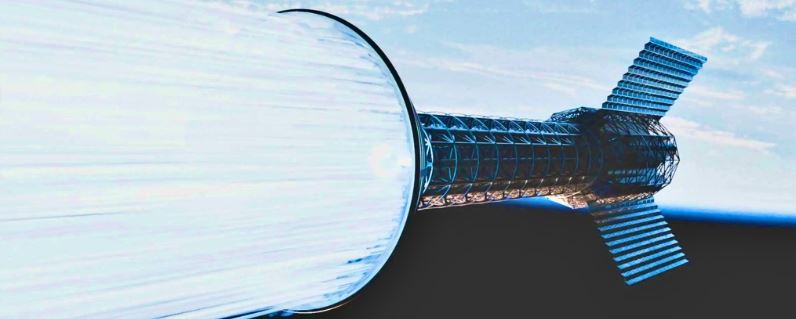
NASA has invested $725,000 in a new rocket system that could solve one of the major obstacles standing in our way of sending humans to Mars: travel time.
With current technology, a round-trip to the red planet would take almost two years. For astronauts, spending that much time in spaceflight comes with big health risks.
They'd be exposed to high levels of solar and cosmic radiation, the harmful effects of zero-gravity, and a long period of isolation.
Space radiation is arguably the biggest threat. Astronauts who spend just six months in space are exposed to roughly the same amount of radiation as 1,000 chest X-rays, and this puts them at risk for cancer, nervous system damage, bone loss, and heart disease, according to NASA.
The best way to reduce radiation exposure and other harmful health effects is to shorten the length of the trip, Troy Howe, president of Howe Industries, told Business Insider.
That's why he's teamed up with NASA to develop the Pulsed Plasma Rocket (PPR): a new rocket system that could shorten a round-trip to Mars to just two months.
This technology "holds the potential to revolutionize space exploration," NASA wrote in a statement, and could one day take humans even further than Mars.
How a rocket could get us to Mars and back in 2 months
The PPR is a propulsion system that uses pulses of superheated plasma to generate a lot of thrust very efficiently. It's currently in phase two of development, funded by the NASA Innovative Advanced Concepts (NIAC) Program.
This phase two study is scheduled to begin this month, and is focused on optimizing the engine design, performing proof-of-concept experiments, and designing a PPR-powered, shielded spaceship for human missions to Mars.
The big advantage of the PPR is that it can make a spacecraft go really, really fast. It has both a high thrust and high specific impulse. Specific impulse is how quickly a rocket engine generates thrust, and thrust is the force that moves the spacecraft along.
The PPR generates 10,000 newtons of thrust at a specific impulse of 5,000 seconds. That means a PPR-equipped spacecraft carrying four to six passengers could travel roughly 100,000 miles per hour, Howe told BI over email.
A spacecraft flying that fast would eventually have to slow down to reach its destination. Howe said the company has accounted for the additional energy and propellant this would require to land on Mars.
Even after phase two is complete, it will still be about a couple of decades before the PPR is ready to blast astronauts off to the red planet.
But once it's available for spaceflight, Howe hopes that this technology will significantly expand the range of human space exploration, perhaps even aiding missions to Pluto one day.
"You can pretty much achieve anything you want in the solar system once we get this technology running in 20 years," he said.
Reality Of Islam |
|
NASA has de
MIT researc

Researchers

Researchers
 9:3:43
2018-11-05
9:3:43
2018-11-05
10 benefits of Marriage in Islam
7:5:22
2019-04-08
benefits of reciting surat yunus, hud &
9:45:7
2018-12-24
advantages & disadvantages of divorce
11:35:12
2018-06-10
6:0:51
2018-10-16
a hero waters thirsty wild animals
9:4:9
2022-01-06
8:39:51
2022-09-23
6:28:21
2022-12-20
11:34:48
2022-06-29
11:11:59
2023-02-01
allah will not answer all your prayers
6:56:28
2022-01-01
7:34:7
2023-02-28
5:41:46
2023-03-18
| LATEST |
 HOME
HOME