الوضع الليلي


 6:42:35
  2019-03-12
  1686
1686
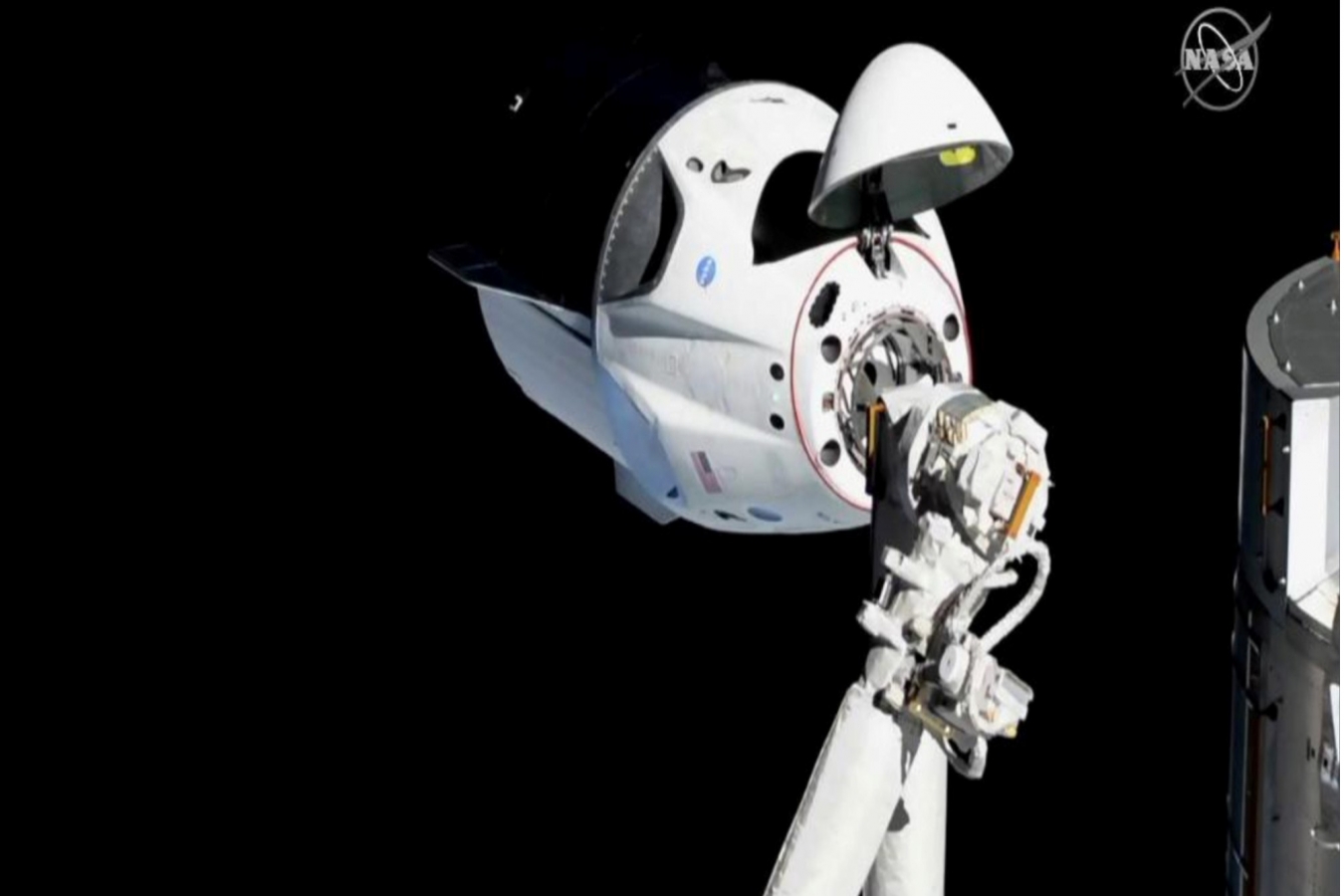
An unmanned capsule from Elon Musk's SpaceX was due to return to earth on Friday after a short-term stay on the International Space Station, capping the first orbital test mission in NASA's long-delayed quest to resume human space flight from US soil later this year.
A SpaceX rocket had launched the 16-foot-tall capsule from the Kennedy Space Center in Florida Saturday morning. After a five-day mission on the orbital outpost, Crew Dragon was set to autonomously detach about 2:30am EST (0730 GMT) on Friday and descend to earth for an 8:45am splash-down off Florida's Cape Canaveral coast.
Officials at the US National Aeronautics and Space Administration will scrutinize the performance of the SpaceX capsule's parachute deployment and its buoyancy after splash-down - two of the design and functionality concerns first reported by Reuters in February.
Musk, also co-founder of electric car maker Tesla, will be watching closely. "I say hypersonic re-entry is probably my biggest concern," he told reporters after the launch, referring to the capsule reaching thousands of miles per hour as it goes through the earth's atmosphere.
The first-of-its-kind mission, ahead of SpaceX's crewed test flight slated for June, brought 400 pounds of test equipment to the space station, including a dummy named Ripley, outfitted with sensors around its head, neck, and spine to monitor how a flight would feel for a human.
The space station's three-member crew greeted the capsule Sunday morning, with US astronaut Anne McClain and Canadian astronaut David Saint-Jacques entering Crew Dragon's cabin to carry out air quality tests and inspections.
The capsule's approach as seen on the earth's horizon from the station represented "the dawn of a new era in human spaceflight," McClain tweeted on Sunday.
By Thursday the space station crew bid farewell to Ripley and closed the hatch ahead of Dragon's Friday morning departure.
NASA has awarded SpaceX and Boeing $6.8 billion in all to build competing rocket and capsule systems to launch astronauts into orbit from American soil, something not possible since the US Space Shuttle was retired from service in 2011.
The launch systems are aimed at ending US reliance on Russian Soyuz rockets for $80 million-per-seat rides to the $100 billion orbital research laboratory, which flies about 250 miles (400 km) above Earth.
NASA Administrator Jim Bridenstine told Reuters the cost per seat on the Boeing or SpaceX systems would be lower than for the shuttle or Soyuz.
© Thomson Reuters 2019
Reality Of Islam |
|
NASA has de
MIT researc
Researchers
Researchers
 9:3:43
2018-11-05
9:3:43
2018-11-05
10 benefits of Marriage in Islam
7:5:22
2019-04-08
benefits of reciting surat yunus, hud &
9:45:7
2018-12-24
advantages & disadvantages of divorce
11:35:12
2018-06-10
6:0:51
2018-10-16
10:55:53
2022-06-13
8:25:12
2022-03-09
8:21:9
2018-06-21
2:42:26
2023-02-02
6:0:8
2023-03-19
9:50:37
2023-02-28
7:59:14
2018-06-21
5:41:46
2023-03-18
| LATEST |
 HOME
HOME