الوضع الليلي


 6:57:51
  2019-03-03
  2555
2555
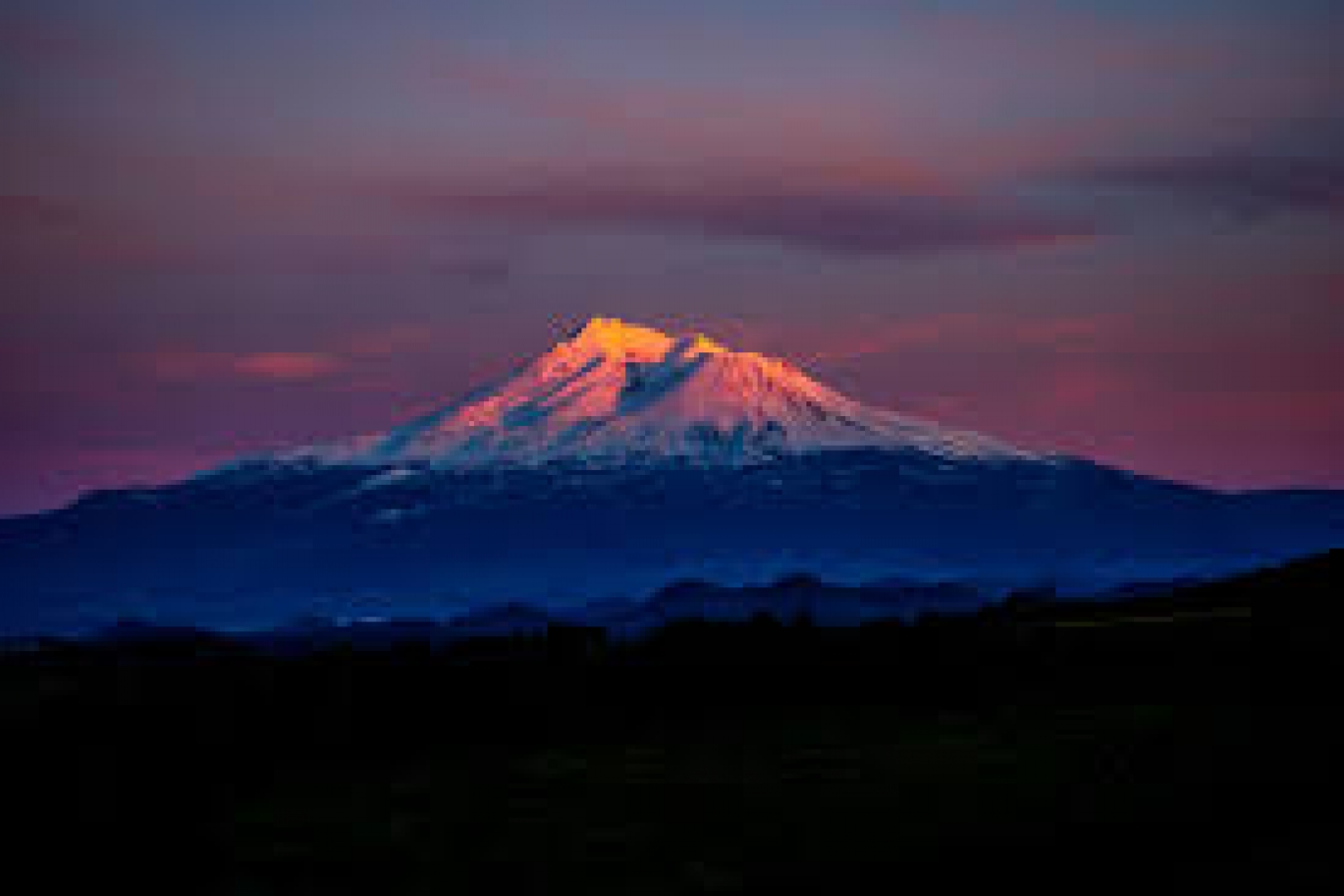
For years now, California has been bracing for the "big one" — the magnitude 6.7 or greater earthquake that is expected to send ripples through the state within the century. But there's another deadly threat that is is almost as likely — and that people may be much less prepared for.
Within the next 30 years, there's a 16 percent possibility of a small to moderate-size volcanic eruption occurring somewhere in California, according to a U.S. Geological Survey (USGS) report posted Monday (Feb. 25). This prediction is based on 5,000 years of volcanic activity records. About 200,000 people live or work in a region at risk of an eruption, and millions visit every year, according to the report.
In comparison, there is a 22 percent possibility that an earthquake at the San Andreas Fault — sometimes known as "the big one" — will hit within that time frame.
"The potential for damaging earthquakes, landslides, floods, tsunamis, and wildfires is widely recognized in California," researchers wrote in the report. "The same cannot be said for volcanic eruptions, despite the fact that they occur in the state about as frequently as the largest earthquakes on the San Andreas Fault."
There are systems in place to detect potential volcanic eruptions — but understanding the hazards in specific parts of the state is important to reduce damage and loss of life from such events, they wrote.
There are eight volcanic areas throughout the state that experts say are "threatening" to people or property nearby, according to the report. At least seven of the eight volcanoes sit atop magma and are thus considered "active."
Of these, Mount Shasta, Medicine Lake volcano and Lassen Volcanic Center in Northern California; as well as the Salton Buttes near the southern border, have erupted within the last 3,000 years and are considered to be high- to very high-risk areas. The Long Valley Volcanic Region in the east has also erupted in that time, but is considered moderate to very high risk. And the Clear Lake Volcanic Field north of San Francisco is also considered to be high to very high risk, though it hasn’t erupted in the last three millenia.
A volcano can cause widespread damage, even when it's not erupting, according to the report. An erupting volcano can cause ballistic showers of rocks, fast-moving currents of ash or lava called pyroclastic flows and acid rain. But even volcanoes that are not currently erupting can cause hazards — grounds around the volcano may be unstable and can cause landslides, for example.
While these effects are most strongly felt near the site of an eruption, mudslides or floods can reach over 50 miles (80 kilometers) away, and ashfall can even reach areas 1,000 miles (1,600 km) away, according to the report.
"Volcanic hazards are likely to be more than a local problem, confined to a single county or region," the report said. "A future eruption in northern California, for example, could adversely impact natural resources and infrastructure important to our statewide water, power, and transportation systems, and will certainly require a multi-jurisdictional response effort." The eruption itself, increasing and decreasing in intensity over time, can last for months, years or decades, as can its after-effects.
While volcanic eruptions can't be prevented, they can sometimes be predicted.
The USGS California Volcano Observatory uses GPS receivers to record ground deformations, seismometers to measure shaking and spectrometers to detect gas emissions from the ground. An increase in activity on any of these three measurements may be the first sign that a volcano will soon erupt, according to the report.
"Although eruptions cannot be stopped, measures to limit exposure and enhance tolerance can make society less vulnerable to their effects," they wrote. This includes evacuating hazard zones during an eruption, making infrastructure more resistant to its effects, swiftly cleaning up after the event and diverting lava or removing combustible material from its path. In the case of ash fall, people can wear particle masks, avoid driving, seal off buildings, shelter livestock and shelter in place.
By Yasemin Saplakoglu, Live Science
Reality Of Islam |
|
NASA has de

MIT researc

Researchers

Researchers
 9:3:43
2018-11-05
9:3:43
2018-11-05
10 benefits of Marriage in Islam
7:5:22
2019-04-08
benefits of reciting surat yunus, hud &
9:45:7
2018-12-24
advantages & disadvantages of divorce
11:35:12
2018-06-10
6:0:51
2018-10-16
2:11:12
2022-10-15
6:0:8
2023-03-19
9:50:37
2023-02-28
9:30:2
2021-11-12
10:47:11
2022-11-22
8:19:41
2018-06-21
8:21:9
2018-06-21
5:41:46
2023-03-18
| LATEST |
 HOME
HOME