الوضع الليلي


 7:27:54
  2025-06-02
  1822
1822
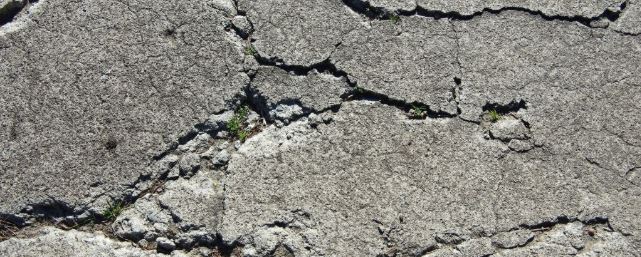
Concrete is an excellent and versatile material, but it's not without its limitations. One of the biggest problems materials scientists are keen to find a workaround for is its brittleness. Concrete doesn't have very high tensile strength at all, which means it's prone to cracking under stress.
One way of resolving this issue would be to develop concrete that can fill in its own cracks, and a new method could be that panacea. A team led by mechanical engineer Congrui Grace Jin of Texas A&M University has developed concrete that can heal itself by harnessing the power of synthetic lichen.
It improves on previous attempts at creating self-healing 'living' concrete made using bacteria, the researchers say, by being fully self sustainable.
"Microbe-mediated self-healing concrete has been extensively investigated for more than three decades," Jin explains, "but it still suffers from one important limitation – none of the current self-healing approaches are fully autonomous since they require an external supply of nutrients for the healing agents to continuously produce repair materials."
Approaches using bacteria, for instance, can require humans to spray nutrients by hand to encourage the organisms to get to work to repair the damaged concrete. In a paper first authored by Nisha Rokaya of the University of Nebraska-Lincoln, Jin and colleagues take this approach a step further.
Lichens are not single organisms, but examples of obligate mutualism, a symbiotic partnership between fungus and cyanobacteria or algae. The researchers designed a bespoke lichen using cyanobacteria that fix carbon dioxide and nitrogen from the atmosphere, and a filamentous fungus that attracts ionized calcium and promotes the precipitation of large amounts of calcium carbonate – the material that makes eggshell, sea shells, coral, and chalk.
In laboratory tests, these lichens were able to heal cracks in concrete by depositing large amounts of calcium carbonate, gluing the crack back together and preventing it from spreading further. It's actually not dissimilar to the ancient Roman self-healing concrete that uses chemical reactions to produce the calcium carbonate to repair concrete.
Unlike the bacteria approaches, the lichen doesn't need to be fed: it just hangs out, doing its thing, and doesn't need to be tended by humans. It needs to be investigated further – the researchers next plan to see how the lichen deals with pre-existing cracks – but it could present a way to improve the lifespan of a material that has become vital to humanity's way of life.
"The results demonstrated the potential of creating a stable phototrophic-heterotrophic system for self-sustained concrete repair," the researchers write, "utilizing the capabilities of two species simultaneously and eliminating the need for exogenous nutrient supplies."
Reality Of Islam |
|

NASA has de
MIT researc
Researchers
Researchers
 9:3:43
2018-11-05
9:3:43
2018-11-05
10 benefits of Marriage in Islam
7:5:22
2019-04-08
benefits of reciting surat yunus, hud &
9:45:7
2018-12-24
advantages & disadvantages of divorce
11:35:12
2018-06-10
6:0:51
2018-10-16
6:14:3
2023-01-18
the happy life of mankind requirement
6:36:36
2022-01-25
7:26:19
2022-04-08
a hero waters thirsty wild animals
9:4:9
2022-01-06
12:47:1
2022-12-20
11:2:27
2022-10-06
6:14:17
2018-06-21
5:41:46
2023-03-18
| LATEST |
 HOME
HOME