الوضع الليلي


 11:1:2
  2024-01-31
  1475
1475
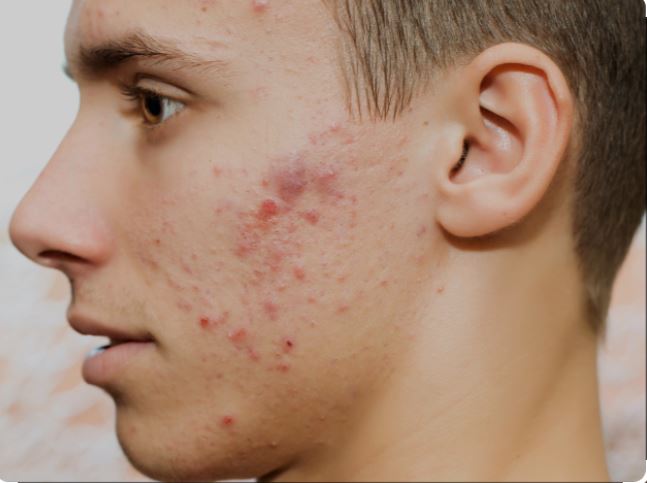
Zits are the pits, shattering anyone's confidence in a radiant pustule of pain. So the idea that the same bacterium thought to cause acne could also be co-opted to clear it up is strangely satisfying news. Like popping a good pimple (not that you should do that).
Cutibacterium acnes is one of the most common bacteria on our skin, and researchers have succeeded in modifying its genes to produce and secrete a molecule that in cell experiments, reduces the build-up of sebum.
Sebum is the oily substance that can gum up dead skin cells and blocks pores if it is produced in excess amounts, causing acne. By gorging on sebum and expanding in numbers, C. acnes can contribute to the acne's inflammation
Yet the bacterium is also vital for healthy skin, producing lipids that help maintain our protective outer barrier. It also happens to reside deep inside hair follicles, practically where sebum is released.
So Nastassia Knödlseder, a synthetic biologist at Pompeu Fabra University in Barcelona, and colleagues thought they could try modifying C. acnes to create a topical therapy for treating acne.
Current treatments for severe acne can either kill off good bacteria, in the case of antibiotics, or come with rare but nasty side effects, in the case of a drug called isotretinoin.
But the researchers took a cue from isotretinoin and its mechanism of action, which turns on a gene encoding a protein called NGAL (neutrophil gelatinase-associated lipocalin) that tells the oil-producing tissues called sebocyte it's time to die.
If the researchers could get C. acnes to produce NGAL, then perhaps they could treat acne without isotretinoin's side effects.
However, until now, the difficulty with using C. acnes as a therapeutic trojan horse was that the bacterium resisted scientists' attempts to slip novel DNA instructions into its genome.
Called transformation, this basic technique of microbiology is the first step in engineering bacteria to manufacture proteins they don't otherwise know how to make. And it needed some improving, in the case of C. acnes.
By experimenting with different buffers to improve the delivery of DNA to C. acnes cells, Knödlseder and colleagues created a strain capable of producing NGAL.
When they applied this strain of NGAL-secreting C. acnes to lab-grown cultures of sebocytes, the modified bacterium significantly reduced sebum levels: twofold after 48 hours.
In mouse experiments, the modified C. acnes also produced NGAL 2 to 4 days after being applied on the animals' skin, and the bacterium was found deep within hair follicles, as expected. There were no signs that the treatment caused increased inflammation.
"We engineered a bacterium that lives in the skin and make it produce what our skin needs" to clear up acne, explains Knödlseder.
However, mouse skin is quite different from human skin, even though it is often used as a model for early-phase testing of topical therapeutics. Mouse skin is looser, four times thinner, and populated by many more hair follicles than human skin.
"Future clinical studies are needed to evaluate the impact of this engineered strain in humans and its potential use to ameliorate skin disorders or support skin health," the researchers concluded in their paper.
Reality Of Islam |
|

NASA has de
MIT researc

Researchers

Researchers
 9:3:43
2018-11-05
9:3:43
2018-11-05
10 benefits of Marriage in Islam
7:5:22
2019-04-08
benefits of reciting surat yunus, hud &
9:45:7
2018-12-24
advantages & disadvantages of divorce
11:35:12
2018-06-10
6:0:51
2018-10-16
7:0:55
2022-05-17
7:34:7
2023-02-28
2:34:48
2022-01-18
7:59:14
2018-06-21
7:45:39
2018-06-21
10:43:56
2022-06-22
6:28:21
2022-12-20
5:41:46
2023-03-18
| LATEST |
 HOME
HOME